Types of Mobility Chairs
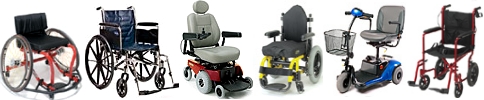
With the variety of mobility chairs available today, you have more choice and options than ever before. As you begin shopping for a wheelchair or scooter, consider your individual mobility requirements and how you plan to use your chair. Consult with your health care provider to confirm your specific needs and help ensure the best possible selection.
The following information provides an overview of your wheelchair choices and may help serve as a starting point in your decision-making process. Mobility chairs fall into three basic categories:
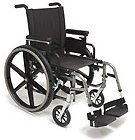
- Manual, push wheelchairs
- Power chairs or electric wheelchairs
- Motorized mobility scooters
Designed for frequent use, manual wheelchairs are constructed with stainless steel and feature large rear wheels so they can be self-propelled. Seat widths range from 16 to 22 inches. Standard models usually weigh around 35 pounds and can support persons weighing up to 300 pounds.
Lightweight wheelchairs, which typically weigh between 27 and 32 pounds, are another type of manual chair to consider. Lightweight models are easier for users and caregivers to push, maneuver, and transport. They may not be as durable or long lasting as standard or heavy-duty chairs that can sustain intensive use and handle more weight.
Companion or transport wheelchairs are an attractive option if you are looking for a manual chair to use for frequent outings. Transport chairs can be easily carried, folded, and stored in vehicles for added convenience.
They weigh much less (around 15 to 20 pounds) than other types of manual wheelchairs and still have the ability to carry around 250 pounds of weight.
These models are designed with small rear wheels and cannot be self-propelled so individuals must rely on a companion to push them.
Other specialty mobility chairs include those designed for children, teens, all-terrain purposes, beach use, and wheelchair sports activities. You can also purchase manual models that recline, as well as those for shower and bathroom use.
Powered Wheelchairs
Similar to manual wheelchair models, there are a wide variety of battery-powered models available for both indoor and outdoor use.
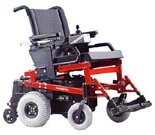
As you evaluate power chair models, be sure to consider each chair’s power, speed capacity, size, ease of steering, seating comfort, transport capability, and battery life.
While they are significantly heavier than manual mobility chairs, electric models are helpful to those with limited upper body strength and who can’t use self-propelled chairs. Electric wheelchairs are easy to operate and provide independence from relying on a companion to push the chair. Models come in front, mid and rear wheel drive.
- Front-wheel drive models offer good indoor maneuverability but tend to fishtail at higher speeds. The overall turning radius is about 25 to 28 inches, depending on the manufacturer. Large wheels are mounted in front of the seating, which allows the chair to go over tougher terrain.
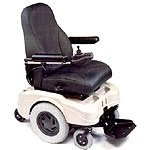
- Mid-wheel drive chairs are excellent for indoor maneuverability.
The small models are good for use in apartments and nursing homes,
while larger models do well in both indoors and outside. Mid-wheel
drive wheelchairs normally have six wheels, two larger (powered) wheels
affixed to the base and 4 smaller wheels surrounding them.
- Rear-wheel
drive power wheelchairs are not as maneuverable as the mid-wheel drive
electric wheelchair, but are stable and well suited for active all
around use. These models have the highest speeds available and the
largest turning radius.
For additional information about power wheel chairs, click here.
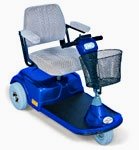
Motorized Mobility ScootersMobility scooters come with three or four wheels and typically feature front and rear lights, padded swivel seating, a host of accessories.
- Mid-wheel drive chairs are excellent for indoor maneuverability.
The small models are good for use in apartments and nursing homes,
while larger models do well in both indoors and outside. Mid-wheel
drive wheelchairs normally have six wheels, two larger (powered) wheels
affixed to the base and 4 smaller wheels surrounding them.
- Rear-wheel drive power wheelchairs are not as maneuverable as the mid-wheel drive electric wheelchair, but are stable and well suited for active all around use. These models have the highest speeds available and the largest turning radius.
Mobility Chair Buying Tips
A well-respected wheelchair retailer (online or offline), should offer a variety of mobility chair models and provide you with ample time to test drive any chairs you are considering.
Your sales representative should be knowledgeable about the chairs you are considering - and able to answer any questions you have.
Once you find a mobility chair you like, check the warranty to see what is included and determine what is not covered. Also, confirm how long you will be protected under the warranty.
Before you finalize the sale, ask if there are any other charges, including delivery - and consider if any additional cost seems reasonable.
Also, find out when you can expect delivery of your chair and the type of training or equipment orientation that you can expect to receive. Along with a date and time for your chair arrival,get the name of the individual making the delivery to your home, if possible.
Inquire about after-sales support, customer service, and where you can get your chair serviced to keep it in excellent condition for years to come.
Related Information - Mobility Chairs
Tips for Purchasing a Wheelchair Online
Buying a Used Wheelchair
Paraplegic Wheelchair Information
How to Choose a Discount Wheelchair Store
Wheelchair Tiedowns
Mobility Chairs Seats
Choosing a Manual or Power Wheelchair
Standing Wheelchairs
How to Size a Wheelchair
All Terrain Wheelchairs
Wheelchair Maintenance
List of Manufacturers
Mobility Scooters


Popular ArticlesTypes of Mobility Chairs Wheelchair Sports Activities Helpful Resource Organizations Mobility Scooter Buying Tips Portable Ramp Options |